When planning a construction or renovation project, material cost naturally receives a great deal of attention. Lumber prices can vary considerably depending on species, grade, dimensions, drying, sourcing, availability, and the amount of processing that has already been performed. When two options appear capable of doing the same job, choosing the less expensive one can seem like an obvious way to control the budget.
Sometimes it is. There is no reason to purchase a more expensive hardwood when a lower-cost material is fully capable of satisfying the project’s appearance, performance, and service-life requirements. Problems arise when the initial price becomes the primary consideration and important differences between the materials are overlooked.
This is particularly relevant for exterior applications such as decking, siding, exterior millwork, and other wood products that will spend years exposed to moisture, sunlight, temperature changes, insects, and regular use. In those environments, the real cost of lumber includes more than the original purchase price. Installation, maintenance, repairs, expected service life, and eventual replacement can have a much greater effect on what the project ultimately costs.
For that reason, a better question than “Which lumber costs less?” is often “Which lumber provides the best value for this particular application?”

The Purchase Price Is Only the Beginning
The price of lumber is one of the easiest project costs to identify because it appears directly on the quote or invoice. Other costs are less obvious at the time the purchasing decision is made. Lumber still has to be delivered, handled, cut, machined, and installed, and depending on the application, it may need to be finished and periodically maintained as well.
Labor is particularly important. If a material performs poorly and needs to be replaced prematurely, the owner isn’t simply buying another set of boards. Someone may have to remove the original material, dispose of it, inspect or repair the underlying structure, purchase replacement lumber, and install the project again. On a large deck, siding installation, or architectural project, those labor and disruption costs can easily become more significant than the difference between two lumber options at the time of the original purchase.
This is why lifecycle cost provides a more useful comparison than board-foot price alone. The least expensive material at the lumber yard can still be the right choice, but only if it performs adequately for the application and does not create additional expenses that overwhelm the original savings.

Species Selection Has a Major Effect on Service Life
Wood species differ substantially in density, hardness, dimensional stability, decay resistance, workability, and other characteristics. Those differences matter relatively little in some applications and become extremely important in others.
An interior decorative component that remains in a climate-controlled environment faces very different demands from a boardwalk exposed continuously to rain and sunlight. Likewise, a wood species that performs well when protected by paint and properly maintained may not be the best choice for a deck whose owner wants to minimize ongoing maintenance.
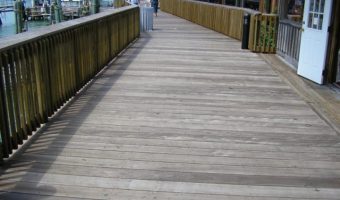
Ipe has become a prominent exterior decking material because its natural characteristics are particularly well suited to demanding outdoor applications. Its density, hardness, and natural durability can provide a service life measured in decades when the deck is properly designed and installed. That doesn’t make Ipe the automatic choice for every project, but it does mean its initial price should be considered alongside the length of time the material is expected to remain in service.
A less expensive species may represent excellent value when its expected service life matches the needs of the project. If choosing that material means replacing the same installation significantly sooner, however, the economic comparison changes.

Replacement Means Paying for Much More Than New Lumber
The cost of replacing deteriorated material is easy to underestimate because the calculation often begins with the price of the replacement boards. In practice, replacement may involve demolition, disposal, new installation labor, equipment, project management, and repairs to components that were damaged or exposed when the original material failed.
The consequences can become even greater when the wood is integrated into a building rather than installed as a relatively accessible surface. Replacing siding, architectural millwork, exterior trim, or other components can affect adjacent materials and finishes. Commercial properties may also have to consider disruptions to occupants, customers, or normal operations while repairs are underway.
These costs are difficult to express as a universal formula because every project is different. They do, however, demonstrate why expected service life deserves consideration during material selection. Spending less on the wood provides limited value if the project requires another substantial investment much earlier than anticipated.

Installation Costs Can Change the Equation
Higher-priced lumber does not automatically produce a less expensive project over time, and Ipe provides a good illustration of why the entire installation needs to be considered. Ipe is exceptionally dense, so installers need appropriate cutting tools, fastening methods, and experience working with the material. Installation can require more time and preparation than a deck built from a softer species.
That additional installation cost belongs in the comparison just as much as Ipe’s potential longevity does. A realistic lifecycle analysis should not exaggerate the advantages of one material while ignoring its disadvantages.
The important consideration is how often those installation costs are likely to occur. A material that is inexpensive and easy to install but requires substantially earlier replacement may cause the owner to incur demolition and installation costs more than once during the period that a longer-lived material remains in service.
For homeowners, architects, and contractors comparing decking materials, the useful calculation is therefore not simply the cost per linear or board foot. It is the likely cost of creating and maintaining the complete deck over the period the owner expects to use it.
Appearance Has a Lifecycle Too
Performance is not limited to whether a board remains structurally intact. Appearance can also influence when owners decide that an installation needs maintenance, repair, refinishing, or replacement.
Real wood naturally changes outdoors. Sunlight affects its color, moisture causes dimensional movement, and exposure gradually alters the surface. Those changes should not automatically be confused with deterioration. Ipe, for example, will weather toward a silver-gray patina when left unfinished, but that color change does not mean the wood has lost the natural durability for which it was selected.
Owners who prefer Ipe’s richer brown coloration can periodically use an appropriate penetrating finish formulated for dense tropical hardwood. Owners who like the weathered appearance may allow the surface to gray naturally. Either approach can be compatible with a long-lasting deck.
This distinction is important when comparing materials because “maintenance” can mean different things. Work required to preserve a preferred color is not the same as work required to prevent a material from decaying or failing. Understanding what maintenance is necessary for performance and what maintenance is primarily aesthetic provides a much more accurate picture of long-term ownership.

Exterior Lumber Has to Be Selected for Moisture Exposure
Rain, humidity, snow, sunlight, and seasonal weather changes continually affect exterior wood. The suitability of a species for those conditions therefore matters much more than simply whether the lumber looks attractive when it is installed.
Material selection is only part of the equation. Even naturally durable hardwood can perform poorly if a deck or exterior structure traps water, restricts airflow, uses inappropriate fastening methods, or fails to account for normal wood movement. Conversely, less naturally durable species can provide good service in appropriate applications when they are correctly detailed, protected, and maintained.
This is another reason broad labels such as “cheap lumber” and “premium lumber” can be misleading. A relatively inexpensive species that is properly selected for its environment can be a much better investment than an expensive wood used incorrectly. The objective should be to match the characteristics of the species with the conditions it will actually encounter.
For exposed decks and similar demanding applications, Ipe’s natural resistance to decay and its dimensional stability are important reasons it continues to be specified. Those characteristics have economic value when they reduce the likelihood that the material itself will become the weak point in an otherwise well-designed exterior system.

Maintenance Should Be Evaluated Realistically
Maintenance costs can become significant over a long service life, but comparisons need to distinguish between different kinds of maintenance and avoid assuming that any wood species is completely maintenance-free.
Decks accumulate dirt and organic debris regardless of the species used. Fasteners, drainage, airflow, and surrounding structural components should occasionally be inspected, and surfaces may need cleaning. Finishes used to preserve a particular color will also require renewal because exterior exposure eventually degrades the finish.
Where species differ is in how dependent their long-term structural performance is upon protective treatments and how susceptible they are to decay, insect attack, and other forms of deterioration. A naturally durable species can reduce some of those concerns, although proper design and installation remain essential.
Before choosing a material, owners should therefore consider what maintenance they are actually willing to perform. A material that performs well only under a maintenance schedule the owner is unlikely to follow may prove to be a poor value regardless of its initial price.

Quality Involves More Than Choosing the Right Species
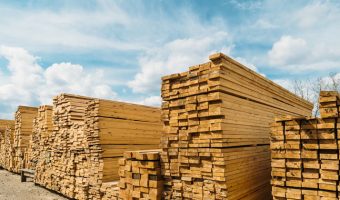
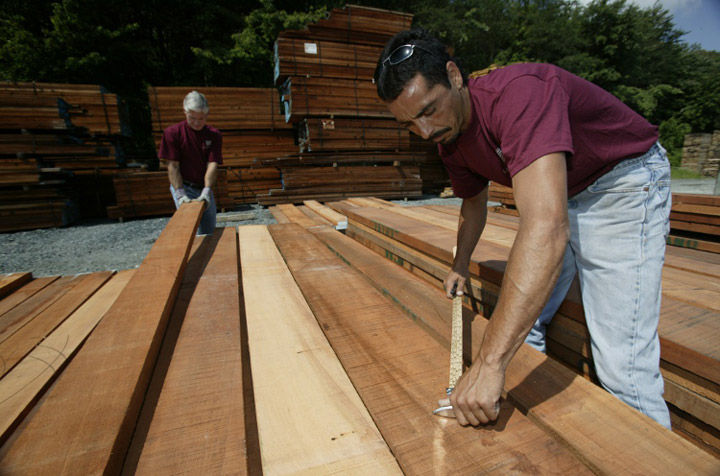
Even after an appropriate species has been selected, the quality and suitability of the actual lumber still matter. Grade, dimensions, moisture content, drying, milling, and storage can all influence how effectively material moves from the lumber yard into the finished project.
Two orders carrying the same species name are not necessarily identical. One supplier may have material better suited to the required dimensions or grade, while another order might require considerably more sorting and waste to produce the same finished components. Lumber that has been dried or stored improperly can introduce additional problems regardless of the natural qualities of the species.
This is particularly relevant with tropical hardwoods because the supply chain begins thousands of miles before the boards arrive at a U.S. job site. Responsible sourcing, import documentation, relationships with mills, material inspection, inventory management, and appropriate handling all contribute to the product that eventually reaches the customer.
For J. Gibson McIlvain, which has been importing and supplying hardwoods for generations, those stages are part of the lumber business rather than something that begins only when a customer requests a price.

Longevity Belongs in the Sustainability Conversation
The environmental impact of a wood product involves more than the fact that a tree was harvested. How efficiently the tree is used, how far material travels, how it is processed, how long the resulting product remains in service, and what eventually replaces it are all relevant considerations.
A short-lived product that must be removed and replaced repeatedly requires additional material, transportation, labor, and disposal with every replacement cycle. Extending the useful life of an installation can reduce the frequency with which those processes have to occur.
That does not mean longevity alone makes any particular lumber choice sustainable. Responsible forestry and legal sourcing remain essential, especially for tropical hardwoods. It does mean, however, that service life deserves a place in the environmental calculation. A responsibly sourced hardwood used efficiently and kept in service for decades presents a very different lifecycle from material that repeatedly has to be removed and replaced.

A Low Price Can Sometimes Reveal Costs Somewhere Else
When comparable lumber is offered at substantially different prices, it can be worthwhile to understand why rather than assuming either that the least expensive material is a bargain or that the highest-priced material must be superior.
Differences may reflect grade, board dimensions, drying, milling, available lengths and widths, sourcing, inventory, freight, or the amount of sorting required to fill the order. A lower price may be completely legitimate because the material is well matched to an application that does not require premium characteristics. In other circumstances, a quote may look attractive because it does not include qualities the project actually needs.
This is where the intended use becomes more important than labels such as “cheap” or “premium.” A customer cutting short components may obtain excellent value from boards that would be unsuitable for someone manufacturing long architectural mouldings. A residential deck and a heavily trafficked commercial boardwalk may also justify different decisions even when both projects initially consider the same species.
The most useful lumber quote is therefore one that can be evaluated in the context of what the customer is actually building.

An Experienced Lumber Supplier Can Help Identify the Real Value
Selecting lumber involves more than choosing a species from a list. An experienced supplier should be interested in what the material will become, because application influences decisions about grade, dimensions, moisture content, milling, quantity, and sometimes even whether the initially requested species is the most appropriate option.
J. Gibson McIlvain has supplied lumber since 1798 and works with domestic and imported hardwoods for residential, commercial, manufacturing, marine, and architectural applications. The company’s involvement in sourcing, importing, drying, inventory, milling, and delivery provides visibility into several stages that can affect the cost and performance of the finished material.
That experience is useful not because every project needs the most expensive lumber available, but because every project benefits from purchasing material appropriate to the job. Sometimes that means premium Ipe decking. In another application, a different species, grade, dimension, or product may provide better value.
Look Beyond the Initial Price Tag
Every project has a budget, and controlling material costs is a legitimate part of good planning. The mistake is not choosing less expensive lumber; it is assuming that the lowest purchase price necessarily produces the lowest project cost.
A meaningful comparison should account for how well the species matches the environment, how long the installation is expected to remain in service, what maintenance the owner is willing to perform, what the material will cost to install, and what would be involved if it needed to be replaced. Grade, dimensions, drying, yield, and supplier capabilities can further influence the economics even when two quotes appear to describe similar lumber.
For an exterior project where durability and service life are major priorities, a naturally durable hardwood such as Ipe may justify a higher initial investment. For another project, the additional performance may not be necessary and a less expensive material could be entirely appropriate. Evaluating those choices in terms of the finished project rather than the price of an individual board provides a much more useful measure of value.
The objective isn’t to buy the most expensive lumber. It is to avoid saving money in a place where doing so creates greater costs somewhere else.
Editor Note: A; C.