J. Gibson McIlvain has been in the lumber business since 1798, but supplying lumber today involves considerably more than keeping boards in inventory and loading them onto a truck. The customers we serve include builders, architects, manufacturers, millwork companies, boat builders, deck and dock builders, and other businesses whose requirements can differ substantially from one project to another.
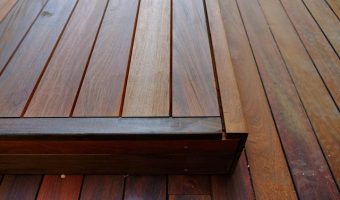
A manufacturer building windows or doors may need a consistent supply of a particular species in very specific dimensions. A contractor working on a large exterior project may need Ipe decking, custom profiles, coordinated delivery, and assistance determining what material is realistically available. An architectural millwork project can involve species selection, unusual dimensions, custom mouldings, finishing, packaging, and delivery requirements that need to be considered long before anything reaches the job site.
In each of those situations, the lumber itself is only part of the equation. J. Gibson McIlvain combines a large inventory of domestic and imported lumber with sourcing experience, milling and architectural millwork capabilities, value engineering, quality control, and nationwide delivery. The result is a lumber supplier that can remain involved through much more of the process than simply filling an order.

Lumber Selected for What You Are Actually Building
There is an important difference between supplying a species and supplying the right lumber for a particular application. Two customers may both request Sapele, Walnut, Genuine Mahogany, Teak, or Ipe while needing very different material once finished dimensions, lengths, grade, grain orientation, appearance, and intended use are considered.
This becomes particularly important for manufacturers. A company producing doors, windows, furniture, musical instruments, or other repeatable products may have a cutting bill that favors particular widths and lengths. Sending that customer lumber selected without regard for the finished components can create unnecessary waste even if the species and grade technically satisfy the purchase order.
J. Gibson McIlvain maintains more than seven million board feet of domestic and imported lumber inventory, giving our team the ability to consider the customer’s end use when selecting material. For customers with ongoing production requirements, we can also develop custom buying programs designed around the specifications needed to keep that production moving.
The objective is not necessarily to supply the highest grade or largest boards available. In some applications, paying for those characteristics would accomplish very little. The better approach is to understand what the lumber needs to become and select material accordingly.

Millwork Capabilities Can Take the Material Further
Some customers want rough lumber delivered directly to their shop because they already have the machinery, labor, and production capacity to handle everything from that point forward. Others would rather receive material that has already been surfaced, ripped, profiled, sanded, textured, primed, finished, or otherwise prepared for the next stage of the project.
J. Gibson McIlvain’s millwork capabilities allow us to accommodate both approaches. Our milling operations can produce S2S and S4S material, machine lumber to precise dimensions, run custom moulding profiles, groove tropical decking for hidden fasteners, prepare siding profiles, and provide a variety of additional processing services. Our architectural millwork capabilities extend further into custom trim, cabinetry, doors, exterior structures, beams, flooring, finishing, and other project-specific woodwork.
Whether having that work performed by the lumber supplier makes economic sense depends upon the customer. A manufacturer with an efficient in-house mill may simply need dependable rough material. A contractor or shop facing production constraints may benefit considerably from receiving material closer to its finished form.
The advantage of having both capabilities available is that the decision can be made according to the project rather than according to the limitations of the supplier.
Quality Control Doesn’t End When the Lumber Is Purchased
A lumber order passes through many stages before it becomes part of a finished project. The material has to be sourced, dried appropriately, graded, inventoried, selected for the order, and potentially milled or finished before it is packaged and delivered. Decisions made at any of those stages can affect yield, appearance, machining, and ultimately the customer’s experience with the material.
J. Gibson McIlvain is the Importer of Record for the exotic hardwoods we import, which gives us direct involvement in a supply chain that begins well before the lumber reaches our yard. We work with suppliers and mills around the world and maintain the documentation required for the imported species we purchase. That visibility is especially important with tropical hardwoods, where legality, responsible sourcing, consistency, and availability cannot be separated from the purchasing process.
Once material reaches our inventory, quality control continues as lumber is selected and processed for individual orders. If the material also goes through our milling or architectural millwork operations, having the lumber and manufacturing sides connected provides another advantage: the people machining the wood are working from material selected with the finished product in mind.

Lumber Expertise Becomes Particularly Valuable When Conditions Change
Wood is not a manufactured commodity with unlimited availability in every conceivable dimension. Species availability changes, grades differ, long and wide boards can become difficult to source, and market conditions can alter pricing and lead times. Imported species add another layer of variables involving overseas mills, shipping, regulations, and the realities of an international supply chain.
Those variables become easier to manage when the lumber supplier understands why a particular requirement exists. If an architect has specified a difficult dimension because it is essential to the appearance of the project, the solution may be very different from a situation in which that dimension was simply carried forward from an early drawing and could be changed without affecting the design.
The same applies to species selection. Sometimes the species originally specified remains the best choice despite a higher price or longer lead time. In other cases, another wood may provide the appearance and performance the project requires while offering better availability or economics.
Our role in those situations is not simply to quote whatever appears on the material list. Decades of experience with species, grades, dimensions, drying, machining, and supply conditions can help customers understand what is practical before an expensive material decision becomes an expensive project problem.

Value Engineering Should Reduce Waste Without Reducing Quality
Value engineering is sometimes interpreted as finding a cheaper material after a project exceeds its budget. With lumber, some of the most useful value engineering occurs much earlier and may not require sacrificing the original design at all.
Because wood comes from trees rather than a manufacturing line, seemingly small specification decisions can have a large effect on material cost and yield. Requiring unusually wide boards, exceptionally long clear lengths, a restrictive grade, or dimensions that do not correspond efficiently with available lumber can increase the quantity of material that must be purchased and the amount that ultimately becomes waste.
Understanding the finished product creates opportunities to address those issues. A slight dimensional change may substantially improve yield without being noticeable in the completed project. A different grade may work perfectly because the finished components are short enough to cut around natural characteristics. Another species may satisfy the same performance requirements with better availability. Milling the material before shipment may reduce handling or simplify production for the customer.
None of those decisions can be made intelligently from the species name and board-foot price alone. Effective value engineering requires understanding both the natural limitations of lumber and what the customer needs the finished product to accomplish.
Delivery & Packaging Are Part of the Lumber Order Too
Producing the correct material does little good if it arrives at the job site damaged, packaged in a way that complicates installation, or at a time when the project cannot receive it.
J. Gibson McIlvain operates its own trucking fleet and delivers wood products nationwide. Packaging and delivery can be planned around the requirements of the order, which becomes particularly important with finished millwork and complex architectural packages. Material may need to fit into a freight elevator, reach a rooftop, arrive in stages, or be organized so installers can efficiently identify which components belong in particular areas of a building.
Those considerations may seem far removed from selecting lumber, but on a large project they can affect labor and scheduling just as surely as species and dimensions do. Looking at the entire path from inventory to installation helps prevent a good material order from becoming a logistical problem after it leaves the lumber yard.
A Lumber Supplier Can Be a Material Partner
The historical photographs on this page show that trucks, lumber yards, and stacks of wood have been part of J. Gibson McIlvain for generations. Those fundamentals remain, but the company’s role has expanded considerably since the days when supplying lumber largely meant selecting boards and putting them on a truck.
Today, a customer may come to us for rough hardwood, tropical decking, marine plywood, custom-milled components, an architectural millwork package, or assistance determining which species and dimensions make the most sense for a particular project. Our involvement can begin with sourcing and material selection and continue through milling, finishing, packaging, and delivery.
Not every customer needs all of those services. In many cases, supplying the right lumber at the right time is exactly what is required. The difference is having the expertise, inventory, and capabilities available when the project requires something more.
For builders, manufacturers, architects, millwork companies, boat builders, and others who rely on wood, that broader relationship can be particularly valuable when specifications become complicated, availability changes, or a project needs to move beyond rough lumber into finished components. The goal is ultimately the same one J. Gibson McIlvain has pursued since 1798: understand what the customer is building and supply the wood – and the services – that help them build it successfully.