When it comes to choosing high-quality lumber – especially for demanding exterior applications like decking – most people focus on species, grade, or appearance. While those factors are important, there’s another critical variable that often goes overlooked: moisture content.
Whether you’re working with dense tropical hardwoods like Ipe or more common domestic species, moisture content plays a decisive role in how wood performs over time. It affects everything from dimensional stability and durability to installation success and long-term maintenance.
With generations of experience behind J. Gibson McIlvain Co., understanding and controlling moisture content isn’t just a technical detail – it’s a fundamental part of delivering reliable, high-performance wood products. In this article, we’ll break down what moisture content really means, why it matters so much, and how it impacts your project from start to finish.

What Is Moisture Content in Lumber?
Moisture content (often abbreviated as MC) refers to the amount of water present in a piece of wood, expressed as a percentage of its dry weight.
Wood is a hygroscopic material, meaning it naturally absorbs and releases moisture based on the surrounding environment. Even after a tree is harvested and milled, this process continues indefinitely.
There are two key states to understand:
- Green lumber: Freshly cut wood with high moisture content (often 30% or more)
- Dried lumber: Wood that has been air-dried or kiln-dried to reduce moisture levels
The goal in most applications is to bring lumber to a moisture content that closely matches the environment where it will be used. This balance point is known as equilibrium moisture content (EMC) – and it’s where wood is least likely to shrink, swell, or distort.
Why Moisture Content Matters So Much
At first glance, a few percentage points of moisture might not seem like a big deal. In reality, even small differences can have major consequences.
Wood expands as it gains moisture and contracts as it dries. This movement can lead to:
- Warping, cupping, or twisting
- Cracks and surface checking
- Gaps between boards
- Fastener failure or loosening
For high-density hardwoods like Ipe, the effects can be even more pronounced. While Ipe is incredibly stable compared to many species, it still responds to changes in moisture – just more slowly and with greater force due to its density.
Getting moisture content right isn’t optional – it’s essential for ensuring that your project performs as intended.
Moisture Content & Exterior Applications
When it comes to outdoor projects like decking, siding, or boardwalks, moisture content becomes even more critical.
Exterior wood is constantly exposed to changing weather conditions:
- Rain and humidity increase moisture levels
- Sun and heat drive moisture out
- Seasonal shifts create ongoing cycles of expansion and contraction
Tropical hardwoods like Ipe are prized for their natural resistance to moisture-related damage, including rot and insect attack. However, that doesn’t mean moisture content can be ignored.
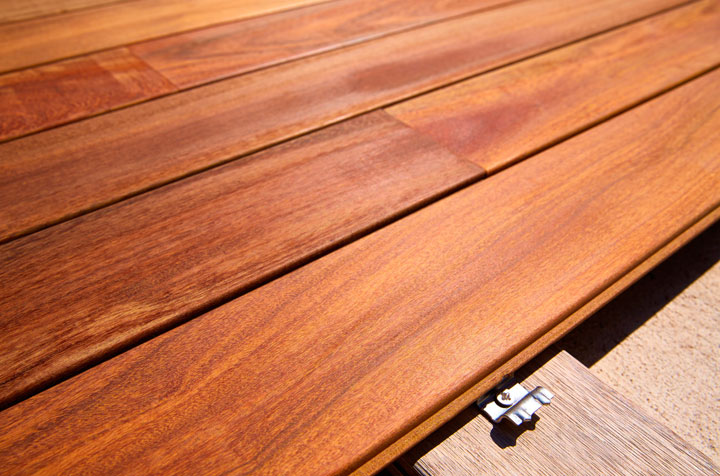
If decking boards are installed too wet, they may shrink excessively as they dry, creating wider-than-expected gaps. If they’re too dry, they may expand after installation, causing tight spacing or even buckling.
Properly conditioned lumber – combined with correct installation practices – helps ensure consistent spacing, structural integrity, and long-term performance.
Kiln-Dried vs. Air-Dried Lumber
One of the most important distinctions in moisture control is how the wood is dried.
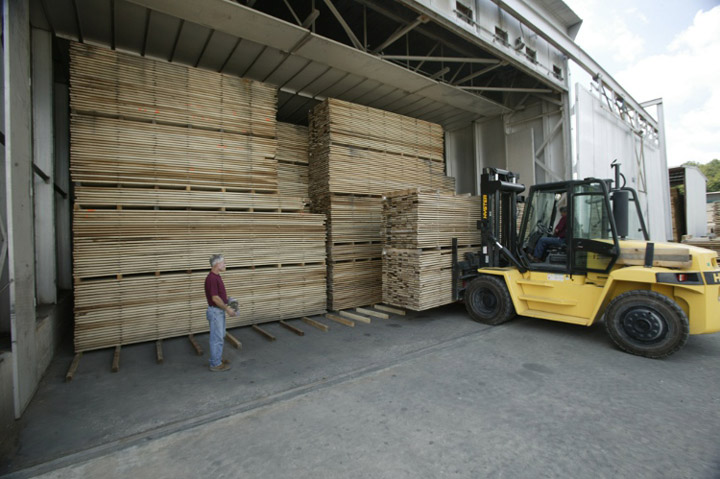
Air-dried lumber is stacked and left to dry naturally over time. While this method is effective, it can result in uneven moisture levels depending on climate and storage conditions.
Kiln-dried lumber, on the other hand, is dried in a controlled environment where temperature, humidity, and airflow are carefully regulated. This allows for:
- More consistent moisture content throughout the board
- Faster drying times
- Reduced risk of defects caused by uneven drying
For dense hardwoods like Ipe, proper drying is especially important. Due to its density, Ipe dries more slowly and requires careful handling to avoid internal stresses.
Working with a supplier that understands these nuances ensures that the lumber you receive is properly prepared for its intended use.

The Role of Acclimation
Even after lumber has been dried to an appropriate moisture level, the process isn’t over. Before installation, wood should be allowed to acclimate to the job site environment.
Acclimation involves storing the wood in the space where it will be installed, allowing it to adjust to local temperature and humidity conditions. This step helps bring the wood closer to its equilibrium moisture content.
For exterior decking, acclimation might involve:
- Storing boards on-site for several days (or longer, depending on conditions)
- Keeping them off the ground and properly ventilated
- Protecting them from direct rain while still allowing airflow
Skipping this step can lead to unexpected movement after installation, even if the lumber was properly dried beforehand.

Measuring Moisture Content
Moisture content isn’t something you can reliably judge by appearance alone. It requires proper measurement using specialized tools.
Moisture meters are commonly used to assess the MC of lumber. These devices can be:
- Pin-type meters, which measure electrical resistance between two probes
- Pinless meters, which use electromagnetic scanning
Each method has its advantages, but both provide valuable insight into whether lumber is ready for use.
For professionals, regularly checking moisture content is part of quality control. It helps ensure that materials meet specifications and perform as expected.

Moisture Content & Fastening
Another often-overlooked factor is how moisture content affects fastening systems.
As wood dries and shrinks, fasteners may loosen if they were installed when the wood was too wet. Conversely, if wood expands after installation, it can place stress on fasteners and surrounding material.
With Ipe and other dense hardwoods, proper fastening techniques are already critical due to hardness. When combined with moisture movement, the importance increases even further.
Best practices often include:
- Pre-drilling holes to prevent splitting
- Using high-quality stainless steel fasteners
- Allowing for proper spacing between boards
These steps, combined with proper moisture management, help ensure a secure and long-lasting installation.

Storage & Handling on Site
Even perfectly dried lumber can develop moisture-related issues if it’s not handled correctly on-site.
Improper storage can expose wood to:
- Ground moisture
- Standing water
- Uneven drying conditions
To maintain consistent moisture content:
- Store lumber off the ground on a level surface
- Use spacers (stickers) to allow airflow between boards
- Cover the top to protect from rain, while leaving sides open for ventilation
These simple practices go a long way in preserving the integrity of the material before installation begins.

Why Experience Matters
Managing moisture content isn’t just about numbers – it’s about understanding how wood behaves in real-world conditions.
From sourcing and drying to storage and delivery, every step in the process affects the final product. Companies with deep industry experience and direct relationships with mills are better equipped to control these variables.
That’s one of the advantages of working with a supplier like J. Gibson McIlvain Co.. With a comprehensive approach to quality control and a global perspective on sourcing, they ensure that moisture content is managed properly long before the wood reaches your job site.

Getting Moisture Content Right from the Start
Moisture content may not be the most visible aspect of lumber, but it’s one of the most important. It influences how wood looks, how it installs, and how it performs over time.
By understanding and accounting for moisture content, you can:
- Avoid costly installation issues
- Improve the longevity of your project
- Maintain the appearance and structural integrity of the wood
In high-performance applications – especially those involving premium hardwoods like Ipe – these benefits make a measurable difference.

Building with Confidence
Choosing the right wood is only part of the equation. Ensuring that it’s properly prepared, handled, and installed is what ultimately determines success.
Moisture content sits at the center of that process. When it’s managed correctly, wood becomes a remarkably reliable and durable material – capable of withstanding years of use and exposure.
For builders, architects, and homeowners alike, understanding moisture content isn’t just helpful – it’s essential. And with the right knowledge and the right supplier, it’s a factor you can confidently control.
Editor Note: A; C.