For homeowners, architects, builders, and property developers planning an outdoor deck, one question comes up repeatedly: Is composite decking actually better than real hardwood?
Composite decking manufacturers have certainly made a persuasive case. Their products are commonly promoted as low-maintenance alternatives to wood, with consistent colors, no splinters, and no need for the periodic refinishing associated with maintaining the original color of many natural woods.
Those are legitimate advantages.
But the comparison becomes much more complicated when premium tropical hardwoods such as Ipe enter the discussion.
Ipe is not interchangeable with the pressure-treated softwood decking that often serves as the “wood” side of composite-versus-wood comparisons. Ipe’s density, durability, strength, appearance, and potential service life put it in a very different category.
The better question, therefore, may not be whether composite decking is better than hardwood.
It is: Better for what – and over what period of time?

Composite Decking Solves Some Real Problems
There is a reason composite decking has become popular.
Modern composite products can provide a predictable appearance with relatively little routine maintenance. Homeowners don’t have to worry about preserving a natural wood color, and manufacturers offer numerous colors and surface patterns designed to imitate different wood species.
Composite decking can also appeal to owners who want an outdoor surface that requires little more than periodic cleaning.
For many residential applications, those characteristics make composite a perfectly reasonable choice.
But “low maintenance” and “better” are not synonymous.
A building material should be evaluated based upon the priorities of the individual project: appearance, structural performance, heat, installation, durability, repairability, environmental exposure, service life, and lifecycle cost.
Once those factors are considered, the comparison with tropical hardwood becomes much more interesting.

Not All Wood Decking Is the Same
Perhaps the biggest problem with many composite-versus-wood discussions is treating “wood” as though it were one material.
It isn’t.
A softwood deck and an Ipe deck can behave very differently.
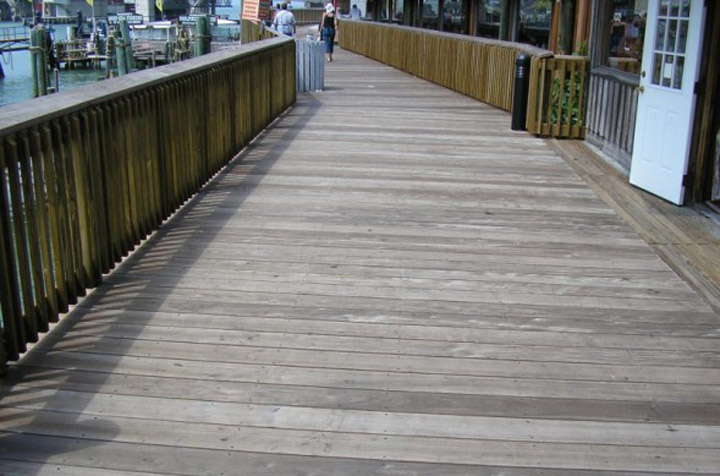
Ipe is an exceptionally dense tropical hardwood with tremendous strength and natural resistance to decay and insects. It has been used for demanding exterior applications ranging from residential decks to commercial projects, public boardwalks, and other structures exposed to heavy use and weather.
Comparing composite decking only with lower-cost softwood lumber can therefore create an incomplete picture.
If the project requires an inexpensive deck with a relatively modest initial material budget, Ipe and composite may not even be competing on the same basis.
If the objective is to create a premium exterior structure expected to perform for decades, however, tropical hardwood deserves a very different evaluation.

Real Wood Still Looks Like Real Wood
Composite manufacturers have made enormous progress in replicating the appearance of wood.
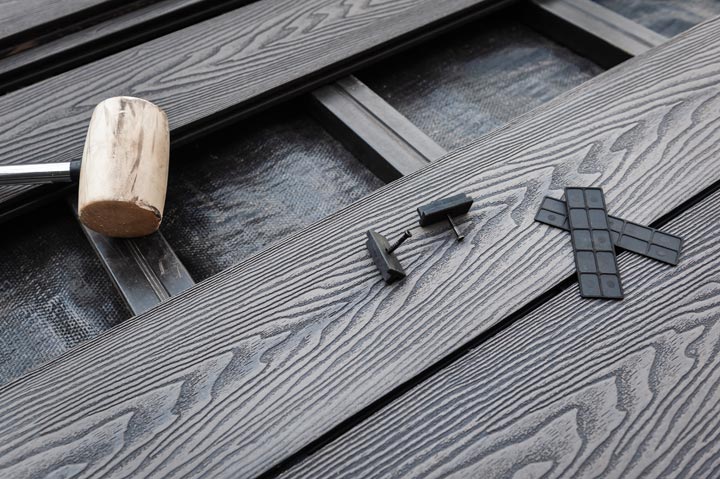
Modern products can include embossed grain patterns, varied coloration, streaking, and other details intended to make boards appear more natural.
But they are still manufactured products designed to resemble something that already exists.
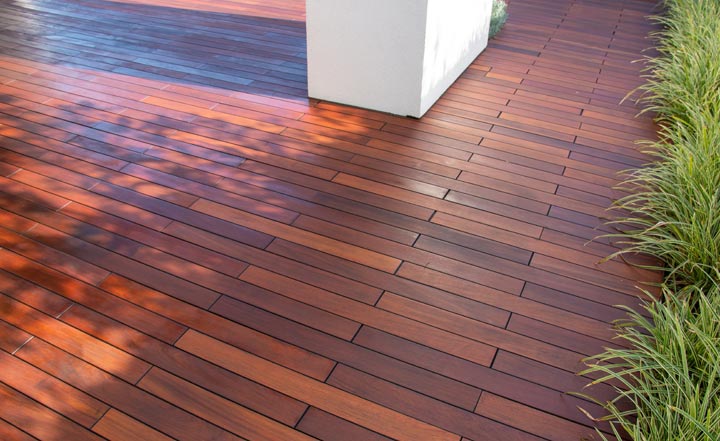
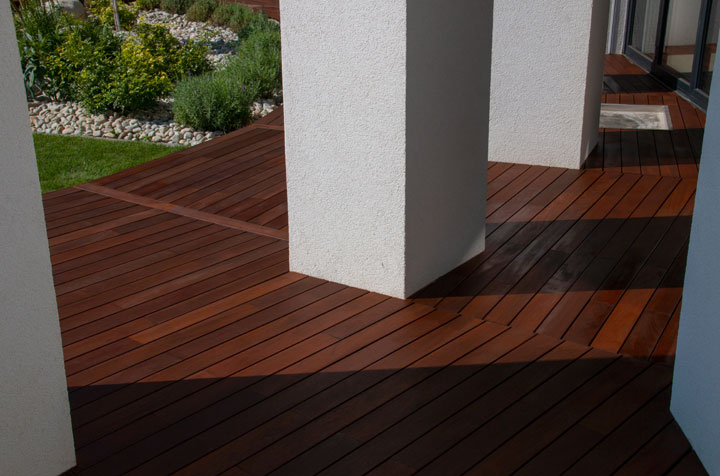
Every piece of real Ipe has naturally occurring grain, coloration, and character. The visual differences from board to board are not printed or manufactured into the surface. They are inherent characteristics of the tree.
For many architects and homeowners, that distinction matters.
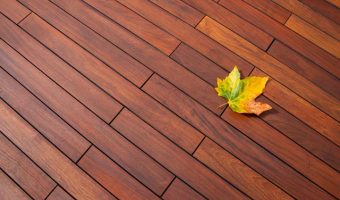
Wood also changes naturally as it ages. Ipe typically begins with rich brown coloration and, when left unfinished outdoors, gradually develops a silver-gray patina.
Some owners love the weathered appearance.
Others prefer to periodically apply an appropriate penetrating finish to retain more of the original brown color.
Neither approach is inherently better. The important point is that natural wood gives the owner that aesthetic choice.

Low Maintenance Does Not Mean No Maintenance
One of composite decking’s strongest selling points is reduced maintenance.
That advantage is real, particularly when the comparison involves homeowners who want natural wood to retain its original color.
But every exterior surface requires some care.
Composite decks still collect dirt, pollen, leaves, food residue, organic growth, and other contaminants. Gaps must remain clear enough for drainage. Stains may need attention. Furniture and planters can create areas where moisture and debris accumulate.
The supporting structure, railings, stairs, fasteners, flashing, and other components also require inspection regardless of the decking material.
The maintenance comparison therefore depends greatly upon what “maintenance” means.
If it means periodically applying a finish to maintain the rich original coloration of Ipe, composite clearly eliminates that particular task.
If Ipe is allowed to weather naturally to gray, however, its maintenance requirements can look considerably different from the stereotype of a wood deck requiring constant staining and refinishing.
Heat Can Matter More Than Buyers Expect
A deck is a surface people frequently touch with bare feet.
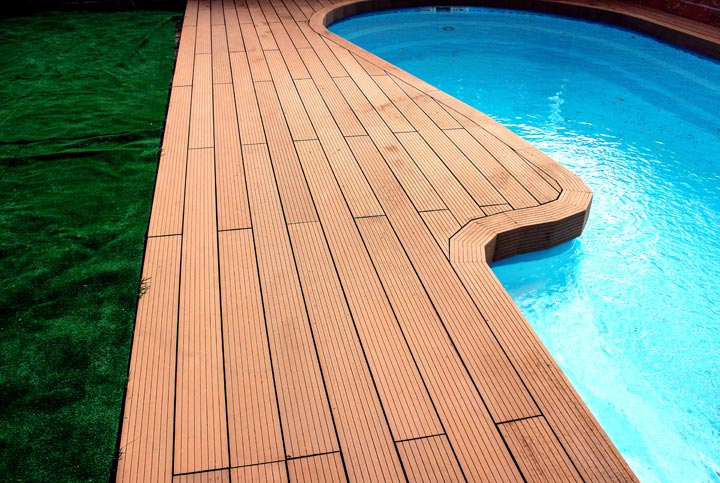
That makes surface temperature an important practical consideration, particularly around swimming pools, restaurants, resorts, rooftop terraces, and decks receiving intense direct sunlight.
Any decking material exposed to strong sunlight can become hot, and darker surfaces generally deserve particular consideration.
Composite decking products vary considerably in composition and color, so sweeping statements about exact temperatures are not especially useful. Site exposure, board color, weather, ventilation, and product formulation all affect performance.
But surface temperature should be part of the material-selection conversation.
A product that looks excellent in a showroom should also be evaluated based upon how people will actually experience it outdoors in July.

Durability Should Be Measured in Decades
Premium decking should not be evaluated only by how it looks during the first several years after installation.
The more meaningful question is what happens over the life of the structure.
Ipe’s reputation is based largely on exceptional natural durability. When properly specified and installed, it is chosen precisely because project teams expect long-term exterior performance.
That changes the economics of the comparison.
Suppose one decking option costs less initially but requires replacement considerably earlier. The cost of replacement includes far more than another purchase of decking boards.
Existing material must be removed. Waste must be disposed of. New material must be transported to the site. Labor must be paid again. Railings or other components may need to be removed and reinstalled. A commercial deck or boardwalk may need to be partially closed while work is performed.
A longer-lasting material can potentially avoid or postpone an entire replacement cycle.
That value doesn’t always appear in an initial price-per-board comparison.
Repairability Deserves More Attention
Decks live in the real world.
Furniture gets dragged across them. Heavy objects fall. Construction work takes place nearby. Stains occur. Individual boards can eventually become damaged.
When evaluating any decking system, it is worth asking what happens when a small portion of the surface needs repair.
Can an individual board be replaced? Will replacement material still be available? Will the new board visually integrate with material that has been exposed outdoors for years? Can scratches or surface damage be addressed?
There isn’t one universal answer because both hardwood and composite products vary.
But repairability should be considered during specification rather than after something goes wrong.
For projects expected to remain in service for decades, the ability to maintain and repair the installed system is part of durability.
Installation Matters with Ipe
Ipe’s remarkable density is one of its greatest strengths, but it also means contractors need to understand the material.
It should not simply be treated like conventional softwood decking.
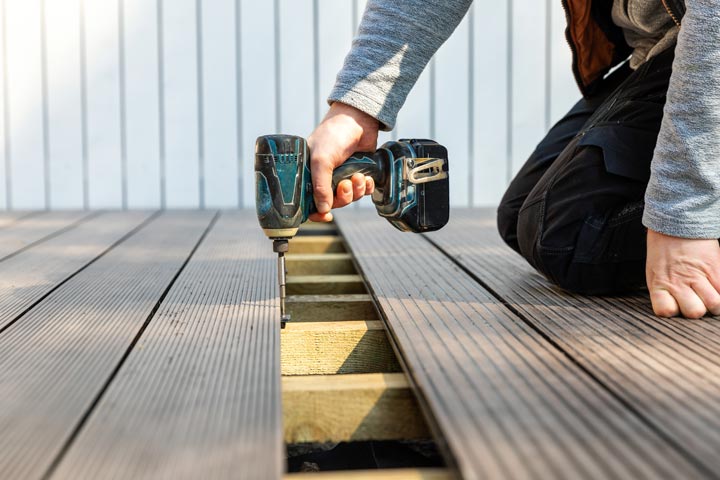
Cutting, drilling, fastening, board spacing, ventilation, and moisture conditions all deserve consideration. Appropriate tools, blades, drill bits, and fasteners make a difference.
The design of the substructure is equally important.
Installing exceptionally durable decking over a poorly designed or short-lived supporting structure undermines the value of choosing long-lasting deck boards.
Proper airflow and drainage should also be incorporated into the deck design. Water will reach an exterior deck. The objective is to allow it to drain and the assembly to dry efficiently.
Good materials cannot compensate indefinitely for bad construction.
Composite Offers Consistency; Hardwood Offers Natural Variation
Whether consistency is an advantage depends upon the project.
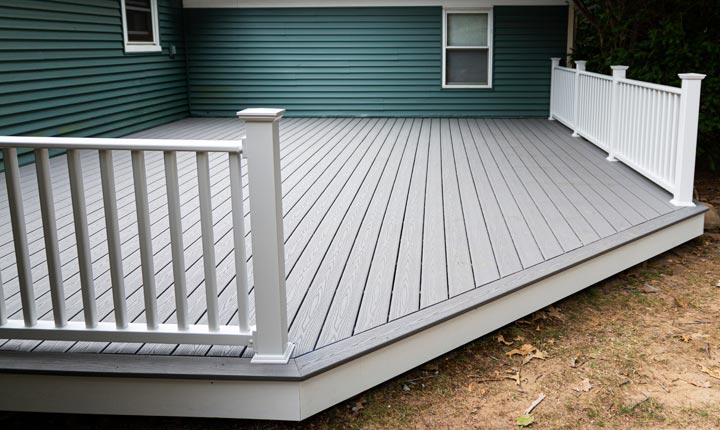
Composite decking is manufactured to provide a controlled visual appearance. Although manufacturers intentionally introduce variations to simulate natural grain, the overall aesthetic can be planned with considerable predictability.
Natural hardwood behaves differently.
Ipe boards can vary in color and grain because they came from actual trees.
For some projects, that variation is precisely the point. Architects and homeowners seeking an authentic natural material often want the depth and individuality that cannot be completely duplicated by a manufactured surface.
For other projects, highly controlled visual uniformity may be more important.
Neither preference is wrong.
But they represent different design philosophies, and buyers should understand which they value before choosing a material.

What About Environmental Considerations?
The environmental comparison between hardwood and composite decking is more complicated than slogans on either side sometimes suggest.
Responsible hardwood purchasing begins with knowing where lumber comes from and ensuring that it has been legally harvested and properly documented.
Tropical forests are valuable resources, and sourcing practices matter.
At the same time, longevity matters when considering resource use. A material capable of remaining in service for decades can reduce the frequency of removal, disposal, manufacturing, transportation, and replacement.
Composite decking introduces its own considerations involving manufacturing, material composition, transportation, service life, and what ultimately happens to the boards when they are removed.
Rather than assuming “natural” or “manufactured” automatically determines which choice is environmentally preferable, project teams should examine sourcing, durability, maintenance, and lifecycle considerations together.
Initial Price & Long-Term Value Are Different Questions
Ipe is a premium building material.
For many projects, it will not be the least expensive decking option at the time of purchase.
But material price is only one component of installed cost, and installed cost is only one component of lifecycle value.
Architects, builders, and owners should consider installation, maintenance, anticipated service life, repairability, replacement costs, and the value of the finished property.
This is particularly important for commercial applications.
Closing a restaurant patio, hotel terrace, marina walkway, or public boardwalk for replacement can create costs extending far beyond materials and labor.
Residential owners may similarly prefer investing in a deck designed around a very long service life rather than planning for another major replacement project in the future.

Composite & Hardwood Serve Different Priorities
Composite decking doesn’t need to be portrayed as a bad product in order to make the case for Ipe.
For someone who prioritizes manufactured consistency, a broad selection of predetermined colors, and avoiding periodic finishing associated with preserving natural wood coloration, composite may be an excellent fit.
For someone who values authentic wood, exceptional density, natural variation, proven exterior performance, and the possibility of a deck designed to serve for decades, Ipe presents a compelling alternative.
The mistake is assuming that one material must universally be “better.”
Good material specification doesn’t work that way.
Ask a Better Question Than “Which Is Better?”
The most productive decking conversation begins with the project rather than the product.
- How will the deck be used?
- How much traffic will it receive?
- What environmental conditions will it face?
- Is natural wood appearance important?
- Will natural weathering to silver-gray be acceptable?
- How much maintenance is the owner willing to perform?
- How long is the structure expected to remain in service?
- What happens when individual boards eventually need repair?
- What matters more: minimizing initial material cost or maximizing long-term value?
Once those questions are answered, the appropriate material often becomes much clearer.
J. Gibson McIlvain Co. has worked with domestic and imported hardwoods for more than two centuries, supplying material for residential, commercial, architectural, marine, and other demanding applications. That experience includes more than simply selling decking boards. Species selection, sourcing, drying, dimensions, milling, installation considerations, and project requirements all influence whether a hardwood will perform as intended.
So, is composite decking really better than hardwood?
Sometimes it may be the better choice for a particular owner or project. But when the comparison is with a properly sourced, properly installed premium tropical hardwood such as Ipe, the answer is far from automatic.
The material that requires the least attention next year isn’t necessarily the material that provides the greatest value over the next several decades.
Editor Note: A; C.