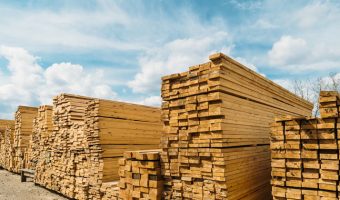
Ipe has earned a reputation as one of the premier decking materials in the world – and for good reason.
This exceptionally dense tropical hardwood offers outstanding durability, natural resistance to decay and insects, impressive strength, and a distinctive appearance that has made it a favorite for residential decks, boardwalks, commercial projects, and other demanding exterior applications.
But choosing an exceptional decking species is only part of the equation.
Even the highest-quality Ipe can underperform when a deck is poorly designed or improperly installed. Conversely, thoughtful design, proper material handling, appropriate fastening, good ventilation, and routine care can help an Ipe deck provide decades of service.
Building for longevity therefore begins before the first deck board is fastened.
Here is a step-by-step look at some of the most important considerations when building an Ipe deck intended to last.
Step 1: Start with Quality Ipe Decking
A long-lasting deck begins with quality material.
Ipe is extremely dense, strong, and naturally durable, but lumber quality still matters. Proper sourcing, grading, drying, storage, and handling all influence the material that ultimately arrives at the project.
Dimensions matter as well.
Deck design should account for available board widths and lengths rather than treating lumber selection as an afterthought. Planning around the material can improve yield, reduce unnecessary waste, and minimize the number of joints required across the deck.
Working with an experienced tropical hardwood supplier can be especially valuable at this stage. A knowledgeable supplier can help coordinate quantities, dimensions, profiles, and project requirements before installation begins.

Step 2: Plan the Entire Deck Before Installation
Ipe decking shouldn’t be approached as simply fastening boards over a frame.
Before construction begins, consider the entire system.
Where will water drain? How much airflow will exist beneath the deck? How will boards terminate at the perimeter? Where will stairs, railings, posts, and other architectural features intersect with the decking? Will boards run in a single direction, incorporate a picture-frame border, or form a more elaborate pattern?
These decisions influence material quantities and installation methods.
Detailed planning also helps prevent last-minute field modifications that can increase waste or compromise the finished appearance.
For complex decks, architects, builders, contractors, and lumber suppliers benefit from discussing these issues early rather than solving them after the material reaches the jobsite.
Step 3: Store & Handle Ipe Properly
Proper handling between delivery and installation is easy to overlook.
Decking should be stored carefully at the jobsite and protected from conditions that could cause uneven exposure to moisture. Boards should be kept supported and organized rather than left in direct contact with soil or standing water.
The objective is to allow the material to adjust appropriately to the conditions in which it will be installed while preventing unnecessary moisture problems before construction.
Because wood responds to its environment, storage and acclimation practices should reflect the climate, site conditions, and construction schedule of the particular project.
Treating Ipe as indestructible simply because it is exceptionally durable is a mistake. Good material deserves good handling.

Step 4: Build a Strong, Well-Designed Substructure
The decking surface may receive most of the attention, but the structure beneath it is equally important.
A deck can only perform as well as the system supporting it.
Joists must be properly spaced and constructed for the anticipated loads and decking configuration. Structural requirements should be determined according to the project design, applicable building codes, and professional recommendations rather than relying upon a universal spacing rule.
This becomes particularly important with diagonal decking, unusual patterns, commercial applications, stairs, and other configurations that may affect structural requirements.
The durability of the framing materials should also be considered. Installing exceptionally long-lasting Ipe over a substructure that deteriorates much sooner can undermine the lifecycle advantage of choosing Ipe in the first place.
Whenever possible, think about the deck as one integrated assembly rather than treating the surface and structure as unrelated components.
Step 5: Give Water Somewhere to Go
Moisture management is one of the most important principles in exterior wood construction.
Ipe’s natural durability provides excellent resistance to demanding outdoor conditions, but good deck design should still prevent unnecessary moisture accumulation.
Water should be able to drain away from the deck rather than becoming trapped around boards, framing, or adjacent structures.
Pay particular attention to areas where decking meets walls, doors, posts, planters, stairs, and other architectural elements. These transitions can become places where debris and moisture accumulate if they aren’t carefully designed.
The goal isn’t to keep an outdoor deck dry – that obviously isn’t possible.
The goal is to allow it to dry efficiently after it gets wet.

Step 6: Provide Adequate Ventilation
Drainage and ventilation work together.
Air movement beneath and around decking helps moisture dissipate and allows conditions on different surfaces of the boards to remain more balanced.
This is particularly important for decks built close to the ground or over areas where airflow is naturally restricted.
Poorly ventilated spaces can remain damp considerably longer after rain or periods of high humidity.
When designing a deck, don’t focus exclusively on what people will see from above. The unseen space beneath the decking can have a significant influence on long-term performance.
Step 7: Account for Natural Wood Movement
Ipe is known for dimensional stability, but it is still wood.
Wood exchanges moisture with the surrounding environment, and dimensional changes can occur as environmental conditions change.
Deck board spacing therefore deserves careful attention.
Spacing decisions should account for the moisture condition of the lumber at installation, anticipated environmental conditions, drainage requirements, and expected movement after installation.
Rather than assuming that one gap measurement is correct for every Ipe deck in every climate, spacing should be appropriate for the actual material and project conditions.
This is another reason experienced installation and material guidance can be valuable.

Step 8: Use Fasteners & Installation Methods Appropriate for Ipe
Ipe’s extraordinary density is one of its greatest advantages, but that density also affects installation.
Techniques commonly used with softer decking materials may not be appropriate.
Pre-drilling is commonly necessary when fastening dense tropical hardwoods, particularly near board ends where careless fastening can contribute to splitting.
Fasteners should also be appropriate for exterior exposure and compatible with the demands of the project.
Some projects use face-fastened systems, while others use hidden fastening methods to create a cleaner surface appearance. Each approach has advantages and installation requirements.
Whatever method is chosen, the fastening system should be treated as an important component of the deck rather than an inexpensive afterthought.
A premium deck deserves hardware engineered for long-term performance.
Step 9: Protect Freshly Cut Board Ends
Cutting a board exposes fresh end grain.
Because moisture can move through end grain differently than through the face of a board, freshly cut ends of dense hardwood decking may benefit from prompt treatment with an appropriate end-grain sealer.
This can help reduce checking and splitting associated with rapid moisture exchange at freshly cut ends.
Planning cuts carefully also improves the finished appearance and reduces unnecessary waste.
For large installations, efficient board layout before cutting can make a surprisingly significant difference in total material utilization.

Step 10: Decide What You Want the Deck to Look Like Over Time
One of the most important maintenance decisions is actually an aesthetic decision.
Many owners want to preserve Ipe’s rich brown appearance. Others prefer allowing the wood to weather naturally.
With exterior exposure, Ipe can gradually develop a silver-gray patina if it is left unfinished. That color change should not automatically be interpreted as decay or structural failure. It is primarily a change in the appearance of the exposed surface.
Owners who want to retain more of the original color can use an appropriate penetrating finish and maintain it according to the product manufacturer’s recommendations.
The important point is to decide what appearance is desired rather than assuming every Ipe deck requires exactly the same finishing routine.
Step 11: Keep the Deck Clean & Inspect It Periodically
Ipe is a low-maintenance material compared with many exterior alternatives, but low maintenance doesn’t mean no maintenance.
Leaves, dirt, organic debris, and other material should not be allowed to accumulate indefinitely, particularly in gaps or areas where they interfere with drainage.
Periodic cleaning also gives the owner an opportunity to inspect the deck.
Look at fasteners, railings, stairs, transitions, drainage areas, and the supporting structure. Addressing a small problem early is generally easier than waiting until it becomes a larger repair.
If a finish is being used to maintain the deck’s color, inspect the surface periodically and reapply the appropriate product when necessary rather than waiting for the finish to deteriorate dramatically.

Step 12: Think in Decades, Not Just Installation Day
The economics of Ipe make the most sense when viewed over the long term.
Ipe typically costs more initially than many conventional decking materials. Evaluating it solely on the purchase price, however, overlooks one of the primary reasons people specify it: longevity.
A deck that performs for decades can change the economics of material selection by reducing replacement cycles, major repairs, and the labor and disruption associated with rebuilding a deck.
But achieving that service life requires the entire project to support the material.
High-quality decking installed over an inadequate structure isn’t a long-term solution. Neither is exceptional lumber combined with poor drainage, inappropriate fasteners, or careless installation.
The objective should be to build the entire deck for longevity.
Ipe’s Performance Begins with Good Decisions
Ipe provides architects, builders, contractors, and homeowners with an extraordinary starting point.
Its density, strength, natural durability, resistance to decay, and distinctive appearance make it exceptionally well suited to demanding exterior applications.
But the species alone cannot guarantee a successful deck.
Material quality, project planning, structural design, ventilation, drainage, board spacing, fastening, end treatment, finishing, and ongoing maintenance all contribute to how well the completed deck performs.
That is why some of the most important decisions about an Ipe deck occur long before anyone walks across it.
J. Gibson McIlvain Co. has worked with hardwoods for more than two centuries and supplies Ipe and other premium lumber for residential, commercial, and architectural projects. Combining quality material with experienced guidance can help architects, builders, contractors, and property owners make better decisions from specification through installation.
Build an Ipe deck correctly, care for it appropriately, and the result can be much more than an attractive outdoor space.
It can be an investment designed to perform for decades.
Editor Note: A; C.