When it comes to choosing the best material for your decking, furniture, or flooring needs, Ipe wood often comes up as a top contender. Known for its impressive durability and beautiful rich color, it’s no surprise that Ipe wood is a popular choice among homeowners and contractors. However, like any material, it’s important to fully understand the often voiced concerns associated with this type of wood before making your decision.

What is Ipe Wood?
Ipe wood is a type of tropical hardwood that originates from Central and South America. It’s renowned for its incredible hardness and resistance to decay, which is why it’s often used for outdoor applications such as decking and high-traffic public boardwalks. In fact, it’s so durable that it has a natural lifespan of up to 75 years without any treatment – far longer than most other types of wood.
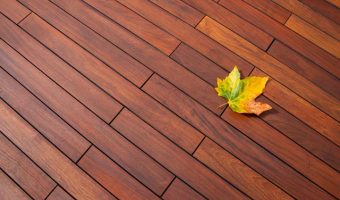
Beyond its durability, Ipe wood also stands out for its attractive appearance. With a rich, dark brown color and fine grain, it can add a touch of elegance and luxury to any project, whether interior or exterior.

Ipe Wood’s Environmental Impact
One common concern regarding Ipe wood revolves around its environmental impact. Given that it’s a tropical hardwood, there are worries about deforestation and the loss of biodiversity. This is a valid concern and one that should not be taken lightly.
However, it’s important to note that not all Ipe wood contributes to these issues. Many tropical hardwood suppliers today are dedicated to sustainable sourcing practices, ensuring their wood comes from managed forests where trees are replanted at a higher rate than they are harvested. Always check for certification from organizations such as the Forest Stewardship Council (FSC) to ensure you’re purchasing responsibly sourced Ipe wood.

At J Gibson McIlvain Lumber Company, we make sure that the ethical harvesting of our Ipe wood supports the long-term wellbeing of forests. Loggers harvesting Ipe trees typically cut down the tallest mature trees, while younger Ipe trees are left to grow, thus rejuvenating the forest over time. New Ipe saplings are then planted throughout the harvested areas to ultimately fill back the forest with mature Ipe trees.
The long-term viability of the forest ecosystem is guaranteed by this sustainable strategy. In addition, when considering Ipe wood’s environmental impact, keep in mind that Ipe wood is fully recyclable. Knowing that your decking won’t wind up in a landfill when its useful life is up is a comforting thought.
Cost of Ipe Wood
Another common concern about Ipe wood is its cost. Compared to other types of wood, Ipe is undeniably more expensive. This can be off-putting for those on a tight budget. However, when considering the cost of Ipe wood, it’s important to factor in its longevity, durability and minimal maintenance requirements.
Ipe wood offers better quality and performance than other decking materials, even though it may cost significantly more up front. Ipe wood easily outperforms synthetic decking solutions, and an Ipe deck offers an incredible lifetime return on investment.

It’s important to compare the expenses of Ipe against alternative decks by taking into account the full lifespan from start to finish. Consider the total cost beginning with the original purchase as well as the costs for installation, upkeep, cleaning, and ultimately recycling or disposal.
Ipe wood’s inherent resistance to rot, mold, insects, and damage means that it requires less cleaning and upkeep. Sanding can be used to remove any scratches, and cleaning with soapy water and a brush is a simple task. Ipe does not require frequent staining or painting like many other decking materials, but you can occasionally apply an oil-based UV protectant to stop the graying. When an Ipe deck’s useful life comes to an end, the wood can then be easily recycled (unlike composite decking or chemically treated wood).

Ipe decks are longer-lasting than other materials, and with each year that an Ipe deck continues to be used, the average lifespan cost per year drops. This makes them more cost-effective over time.
While the upfront cost may be higher, the long-term savings can be substantial. With its natural resistance to decay, rot, and insects, Ipe wood requires less maintenance and replacement over time compared to other types of wood. So your initial investment will be much higher, but over the long term that investment should play out in your favor.

Maintenance of Ipe Wood
Speaking of maintenance, this is another area where concerns often arise. While it’s true that Ipe wood requires regular maintenance to maintain its beautiful color, the actual process is quite straightforward.
To keep your Ipe wood looking its best, it’s recommended to clean and oil it once a year. This helps to retain its rich color and prevent any surface cracking. If you prefer a more rustic look, you can choose to let your Ipe wood age naturally without giving it oil-based UV protectant treatments. Over time, it will develop a beautiful silver-gray patina.

Installation of Ipe Wood
The installation of Ipe wood can also be a concern for some people. Due to its hardness, it can be more challenging to work with than other types of wood. For those unaccustomed to dealing with Ipe, it’s easy to get frustrated when drill bits break or when power screwdrivers overheat while you are vainly trying to force a screw into the super hard board.

However, with the right tools and some patience, it’s certainly manageable. Pre-drilling holes before screwing or nailing can help prevent splitting. Also, using carbide-tipped saw blades can make cutting easier. And remember, while installation might be a bit more labor-intensive, the end result is a beautiful and durable hardwood structure that will last for decades.
Ipe decking is both durable and luxurious. Even with the difficulties of installing Ipe wood, the outcome is magnificent and worth every drop of sweat (and busted up drill bit). Do your research in advance, use the right kind of equipment, implement the proper building methods, and let your equipment do the majority of the work to help streamline the process.
“How do I deal with the color variations from Ipe board to board?”
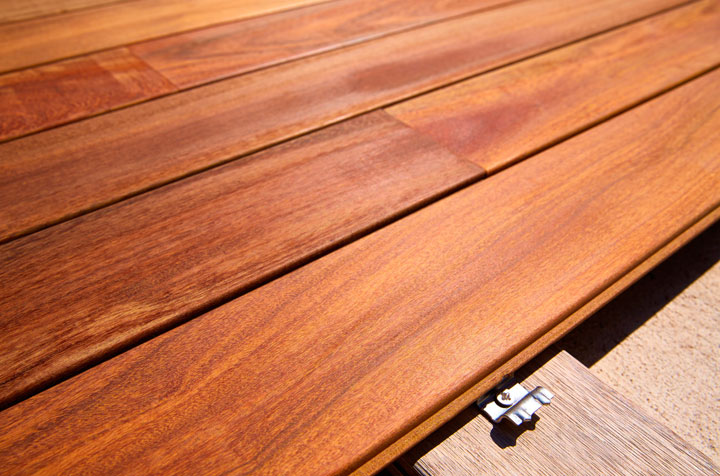
This is a reality you will face when you build with real wood. Composite decking will have manmade uniformity, but real wood is going to demonstrate its inherent beauty in terms of varying hues and patterns. Real hardwood might not be for you if you want a continuous, solid hue or if you intend to paint your deck to get that uniform look. Ipe is less porous and more challenging to paint or stain due to its high fiber density, which also contributes toward its minimal maintenance and excellent resistance.
Ipe decking offers a choice of medium to deep brown wood tones, giving it a distinctive, personalized appearance, and there will inevitably be color variations from board to board. Ipe wood’s unique design appeal is enhanced by its exotic grain patterns. People will notice and want to know where you got such lovely decking!

“Will my Ipe boards experience checking?”
In order to reduce the likelihood of checking, which is a term that describes cracks that may appear at the ends of the boards as a result of exposure to ultraviolet light, it is possible to apply a UV coating prior to installation. Ipe is less prone to checking than some woods, but it is still wise to try to minimize any checking through letting your decking boards first adjust to your climate before installation, applying a UV coating to the boards, and then implementing routine maintenance procedures for the deck.

“Will my Ipe boards experience cupping?”
Wood cups for two main reasons: inadequate ventilation and incorrect fastening. Making plans in advance is the greatest approach to avoid any cupping issues. By taking the appropriate acclimatization procedures for your Ipe boards on the job site prior to installation, cupping of decking boards can be avoided.
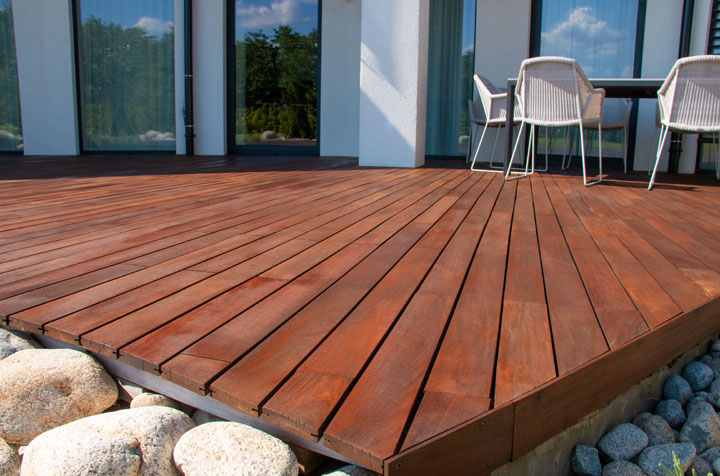
Build your deck as high off the ground as you can – at least thirty inches – unless there are special conditions that call for a low clearance deck. Make sure the area beneath your deck is properly graded and has a slope that directs water away from your house. By allowing for the escape of humid air through proper spacing, fastening, and ventilation below and around the deck, you may minimize cupping as well as avoid other problems like rot, mold, and water damage.

Ipe Wood’s Durability and Longevity
Despite its renowned durability, some people still have concerns about the lifespan of Ipe wood. It’s worth repeating that untreated Ipe wood can last up to 75 years – and even longer with regular maintenance. Yearly reapplication of a UV oil protectant will help maintain the fresh, natural wood tones of your Ipe wood decking.
The factors that affect the durability of Ipe wood are similar to those for any type of wood: exposure to harsh environmental conditions can accelerate wear and tear. However, given its natural resistance to decay and pests, Ipe wood is far more resilient than most other types of wood.

Ipe Is Well Worth It
While there are valid concerns about using Ipe wood, most can be mitigated with the right information and practices. From ensuring sustainable sourcing to understanding the maintenance requirements, it’s important to be informed before making your decision.
Remember, while the initial cost and installation effort may be higher than many other types of wood, the long-term benefits of durability, beauty, and longevity make Ipe wood a worthwhile investment for many projects. As always, consider your specific needs and circumstances before deciding whether Ipe wood is the right choice for you.